Friday, October 17, 2014

One Month Update: I'm doing just fine

If we’re being real, study abroad is hard. I’m on the other side of the world, forced to speak a new language, not know where anything is, and battle the price of international calls home. I am constantly dirty and I’ve yet to hear a moment of silence. Of the contacts in my phone, I’ve known none for more than a month. Stores and hospitals and cultural expectations are different, and you can't tell people that they're wrong. And it makes me tired.

But somehow in the midst of everything this is refreshing. As much as I hate the dust that picks up off the buses and attaches itself to my contacts, my face, the surface of my lungs, I love that my walk to school is fifty percent dirt path – untouched by concrete and industrialism. I miss my cities, but I like the way it feels to stand in the center of chaos and remember just where I am on the globe. I like that the power consistently goes out but we continue on with our conversations in the dark. I like that I get to see what a country looks like as it develops.

Other people here think the churches are crazy. But I’ve never felt so at home. And so filled with joy!
And even though my thighs officially touch each other when I walk now, I am so thankful for the measures my family goes through to make sure I have every food I’ve ever wanted. And women here look awesome with their curves.

Even though I miss my mother’s lemon bars and Sunbear’s meatloaf, my family has done everything to make me feel at home. And they’ve most certainly succeeded.

And while I’ve yet to see an African sunset, the trees that block it are covered in flowers in vibrant pink and orange and purple. And I’ve stared at Mt. Meru long enough to feel like we are one.

And while my heart aches for a Daz Bog Chocolate Chip Chiller, I love to explore what else we could call extravagant.

At the end of the day, this is what I’ve learned about my American life:
  • We pay too much for everything.
  • We don’t sleep enough.
  • We stop caring too early in the game.
  • We really need Jesus more often.
  • We should spend more time outside.


But just like Africans:
  • We really love people. And we really love to admire beautiful things.
  • We can dance and we deserve to.
  • We have a good taste in music and movies and art.
  • We can adapt and we can succeed.
  • We are smart and we are driven and our futures are beautiful.
  • And most importantly, we've all got a sunset worth watching.

Monday, October 13, 2014

All Things Sustainability: Thrive or Survive?

This week I had the fortunate opportunity of visiting the organization ECHO just outside of Arusha. The purpose of this organization is to connect sustainable development projects in Tanzania together to collaborate and ensure more efficient uses of resources. During our time there, we received a tour of some of the sustainable projects and garden designs that are being used throughout the community.
The purpose of many of these designs is to be efficient, low cost and with a substantive harvest. 

This includes water filtration systems and irrigation systems. As you can see here, this is an efficient way of collecting clean water. With an established contraption which connects rain runoff to the covered pool, you are able to collect gallons upon gallons, keeping it together with a single tarp.

There’s this “miracle tree” that everyone swears by called Moringa. Essentially it’s become a way to purify water, cure backaches, provide necessary vitamins and minerals and even be used for building materials and spices. The purification system may be my favorite. You grind up the seeds, pour into water and shake it around. The dirt and bacteria binds onto the seed powder and then when you poor through a filter cloth, the water is free from impurities. Place the water in the hot sun for a while to fry the remaining materials and voila! You’ve solved the second biggest issue of mankind: acquiring clean drinking water. (And everyone knows the first biggest issue is trying to find decent wi-fi.)

Most importantly, I learned the best question to pose in a developing country
. As was explained to us, it’s important to look at a plant and ask, “what would it take to make this plant thrive?” Not just survive, but thrive. This same question could be imposed on your own life, or even on a country you intend to “help”. Under what environmental and social conditions are humans (and countries) guaranteed to thrive. What are the ultimate conditions that will ensure we are healthy, we are progressive and we are living the lives that are intended.

I think we often face the question of how to contribute to a society without imposing your own culture in an ignorant, totalistic matter. But perhaps if we come to a new country asking first, what are the necessities for thriving rather than commodities for our idea of a comfortable life, we can more effectively help without the western volunteer complex.


Thursday, October 2, 2014

So, why are you here?

I have a not-so-closet confession to make. I don’t know why I’m here.

Let me take a moment to explain my struggle for purpose. First off, I’m an “mzungu”. What this means is I am a white person in a clearly not white land facing the constant impending question of, “why are you here?” Now, this question is never asked with a harsh tone and people are so excited to talk to the American, stammering in broken Swahili, wide-eyed and spewing “asante sana”. However, the question has left me overwhelmed as I lack the linguistic capacity to bare my soul.

So you’re a tourist? (Mtalii)

No, definitely not. The idea of casually passing through this land without understanding the culture or the people makes me shudder with fear that I’ll receive the guest treatment. It’s bad enough that our understanding of East Africa is limited to Tanzanite and the Serengetti. It’s even worse if I play the role of tourist refusing to learn about more than the scenic wonders of this land.

So you’re a volunteer? (Mwenye Hiari)

While my program does have some elements of human rights development and service learning, it’s absolutely imperative to establish that I am not a volunteer. While volunteers are highly valuable and appreciated by the local community, I hope my contribution to this community looks more like active participation in a community I now call my own. In theory, this allows me a greater understanding of my role and my realistic impact, still to be determined.

So you’re a student? (Mwanafunzi)

Yes. I’m here to learn and to learn only. I’m often struck with the question of what motives my host family might have had for welcoming the strange American with soft hair that never eats and talks to the baby goats. This isn’t one of those national park moments where I take only pictures and leave only footprints. It’s important to realize I’m suddenly an active participant of this community, living and breathing this society as if it were my own. I do care about the bickering of political parties. I do care about social classes and accessibility of clean water. I do care about unacceptable standards of living and the effects of tourism on Tanzania. I may be a transplant, but it doesn’t take long for a new organ to accept the blood flow and work effectively to build the body.

So you’re a transplant?

Yes. My real question then: how might the life of a transplant positively contribute to the lives and society of a temporary environment, rather than simply my personal self-betterment? Any suggestions?

Monday, September 22, 2014

Mchango wa Harusi: How to Have a Wedding

Yesterday I had the opportunity to attend an Mchango wa Harusi, a wedding fundraiser exclusively for mamas and dadas (all the women celebrating with the bride-to-be). So...here's how the pre-wedding festivities commence.

1. Get Engaged
Though I've yet to receive the full story, Tanzanian engagements seem to be just like American engagements. For many women though, the transition to marriage is also a transition from their parents home to a new home with their husband, rather than an independent bachelorette pad. When I tell my Tanzanians that I had my own apartment, separate from my parents, many were shocked. In Tanzanian culture, you can live in your parents household even into your thirties - with no accusation of being a "late bloomer".

2. Wedding Fundraiser
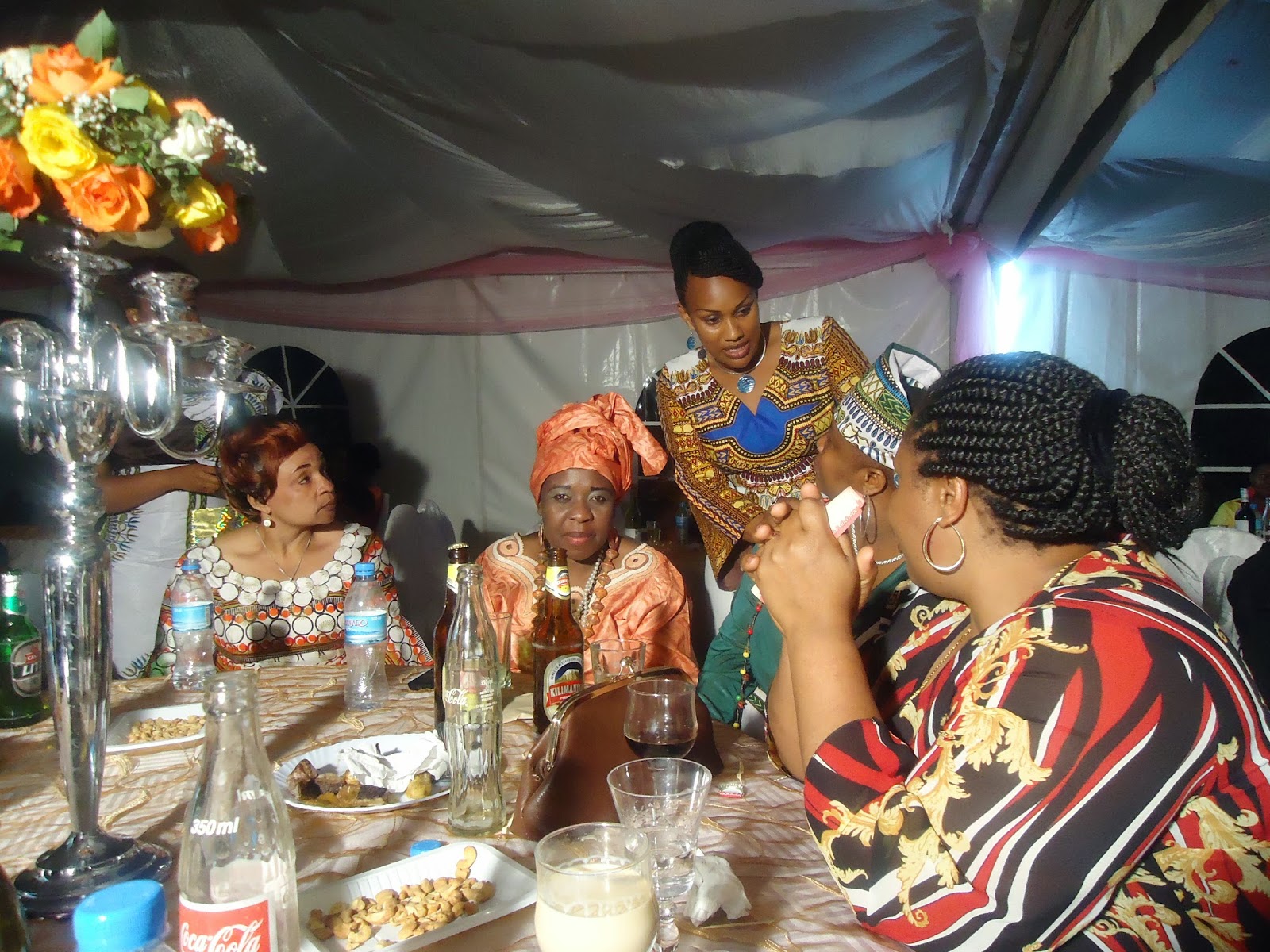
Tanzania is all about community. The celebration of one is the celebration of all. And so is the financial burden. For the one we visited, our future bride invited more than fifty women for a delightful dinner and participation in this fundraiser. My mama, pictured here, served as the MC for the night, welcoming everyone, leading the ceremonies and announcing donations. The smiling woman to her left is the bride-to-be.


Note the matching fabrics of the dresses. The fabric here is called a kitenge. The women with the green pattern match the wedding colors, with the other three women being the bride, the bride's mother and the MC. The bride chooses the pattern, then the women are responsible for taking the material to a tailor and having it made any way they please.

The women then take turns giving their blessings and words of wisdom to the guest of honor. Of course their dialogue is more complicated than my elementary Swahili skills can handle, but you don't need to understand the language the feel the love in the room. The experience is absolutely heartwarming.

Following dinner, each guest stands, states their name and gives either a set of cash or a pledge to pay, monetary gifts ranging from 50,000 shillings to 500,000 shillings. I found it so interesting that each gift was given so publicly and so willingly. As my mama explained to me, with each woman doing this for her own wedding, you ultimately give and receive the same amount of money. 

At the end of the day, the bride has received several millions of shillings (over $7000). But wait. There's more.


3. Sendoff and Kitchen Parties
The best comparison would be a classy bachelor/bachelorette party. All women and men are invited to this celebration, and each guest brings a gift. Relationships to the bride and groom predict the type of gift you might bring. Gifts may include kangas (the traditional skirt), wooden spoons, dish sets, televisions, furniture, cars and even homes. As one woman explained to me, following the wedding, you walk into your new home completely prepared for your arrival. 


Maybe I'll marry a Tanzanian after all. 


Friday, September 19, 2014

Field trip to a Maasai Village (Kijiji cha waMaasai)

So yesterday's adventures included a field trip to a Maasai village. Many people are familiar with the Maasai tribe, actually, when you think "Africa", you are likely imagining a Maasai village. Something like....this:
This is the leader of the Maasai tribe we visited. Yes, most of the children in the background are his. 

Residents of this home include two wives and  ten children.

Cows (Ng'ombe) are used as currency here, for dowries or land or whatever. Though there's very little concept of credit in the area, sometimes cows are "promised" in the future, rather than given as currency all at once.


However, the traditional Maasai communities are actually very different than the lifestyles of most Tanzanians. There are over 120 tribes in Tanzania, but most people only know the Maasai. Reasons they’re intriguing? Men have maybe 2 or 10 or 18 wives and so many children it’s hard to know their age. Cows are used as currency. Homes are built with sticks and mud and literally wash away each time it rains. Traditionally, the Maasai were pastoralists, meaning they were nomadic for their cows.
We had such a National Geographic moment, sitting on little stools surrounded by twenty children and the leader (kiongozi) of the tribe, listening to the elders speak in a combination of Kimaasai and Kiswahili with a translator by our side. In Swahili, we asked them questions about their history, their culture and the lives they live now. After asking them what they ate, they brought out a large gourd and tin cups. As we sat in a circle they opened the gourd and poured (more like slopped) out this liquid porridge with little lumps, Loshouro (sp? Does anyone even know how to spell this?). It was essentially a combination of milk straight from the trusty cows, corn, bananas, and some weird spices. The taste was something between cottage cheese and vomit with a hint of strawberry yogurt. Moral of the story, field trips are better when you bring your own sack lunch.
Following that, they let us tour the village, see their source of water at a nearby spring and continued to answer the questions. The children were so excited to see wazungu (white people) and they even wanted us to teach them English.
The kind, patient leader of this tribe so willingly shared his culture. He has two wives, two cows and too many children to count. See the kids in the picture below? Sounds like at least eight or ten were his. And the home pictured, suits two wives and ten children. Due to their culture of pastoralists, the homes are built with branches, mud and cow poop, sturdy enough to house the whole family but biodegradable like no other, washing away with heavy rains.

 However, the traditional Maasai communities are actually very different than the lifestyles of most Tanzanians. There are over 120 tribes in Tanzania, but most people only know the Maasai. Reasons they’re intriguing? Men have maybe 2 or 10 or 18 wives and so many children it’s hard to know their age. Cows are used as currency. Homes are built with sticks and mud and literally wash away each time it rains. Traditionally, the Maasai were pastoralists, meaning they were nomadic for their cows.
We had such a National Geographic moment, sitting on little stools surrounded by twenty children and the leader (kiongozi) of the tribe, listening to the elders speak in a combination of Kimaasai and Kiswahili with a translator by our side. In Swahili, we asked them questions about their history, their culture and the lives they live now. After asking them what they ate, they brought out a large gourd and tin cups. As we sat in a circle they opened the gourd and poured (more like slopped) out this liquid porridge with little lumps, Loshouro (sp? Does anyone even know how to spell this?). It was essentially a combination of milk straight from the trusty cows, corn, bananas, and some weird spices. The taste was something between cottage cheese and vomit with a hint of strawberry yogurt. Moral of the story, field trips are better when you bring your own sack lunch.
Following that, they let us tour the village, see their source of water at a nearby spring and continued to answer the questions. The children were so excited to see wazungu (white people) and they even wanted us to teach them English.
The kind, patient leader of this tribe so willingly shared his culture. He has two wives, two cows and too many children to count. See the kids in the picture below? Sounds like at least eight or ten were his. And the home pictured, suits two wives and ten children. Due to their culture of pastoralists, the homes are built with branches, mud and cow poop, sturdy enough to house the whole family but biodegradable like no other, washing away with heavy rains.

Tuesday, September 16, 2014

Watoto Wazuri: Just a few of the beauts that have stolen my heart

Dionne and Faith

Darrell

Esther

Faith and Bradley


So...children, children everywhere. If you want to learn a language surround yourself with little ones that speak it. They're so patient, so sweet and you actually don't need to speak any Swahili to understand what they're doing.

Language (Lugha)
Fun fact, Tanzanians know three languages: English, Swahili and their mother tongue. Many schools are taught solely in English so younger students surpass on bilingual expectations. Swahili is mostly used in the villages, cities and home. Their third language is the language of their tribe, whether Masaii, Mchaga or another. Tanzanians love and respect their history and one way to preserve their culture is to preserve the language. For me, I'm still trying to get down my English.

Monday, September 15, 2014

We Were Wrong About Everything

....except for disconnection from society.


So here we are. It's been more than a week since I crash-landed in the BEAUTIFUL Arusha, Tanzania. I can promise you one thing, this place does wonders for your soul. At this point, I think it's absolutely imperative to know that we had no idea what Tanzania was like. Because yes, everything is new, and yes, I am overwhelmed, I guess I'll just tackle the issues as they come.

Family (Familia)

I have always had the understanding that family can mean more than blood. However, the people of Arusha have taken that to a new level. If you have children, you introduce yourself as Mama "first name" or Mama "name of your first born". So for instance, my mother would be Mama Carol or Mama Andrew. Everyone, please start calling her that. My new mother is Mama Esther or Mama Derrick. I have three brothers: Derrick (16), Dionne (12) and baby Darrell (pronounced Dah-Rail). Aside from the technical number of children that live there, there are about a million others constantly circulating through the house. The others sleep there, eat there, or sometimes just come to play. To paint a picture, I wandered into our living room yesterday and came across Mama Esther holding a 3 year-old girl. I asked her what the girl's name was and she replied, "I don't know, this is the first time I've seen her." So that's African babysitting for you.

Food (Chakula)
These people literally never stop eating. No matter how many times you say "Asante sana, lakini nimeshiba, nimeshiba", they never believe you. ( Thank you, but I am full). I think we had seven full meals yesterday. And Mama Esther told me, "when you leave for America, you will be fat. That's how they'll know you're African."

Home (Nyumba Yangu)
Before leaving for Africa, I was informed by my study abroad program that I would be living in a home with no electricity and no running water. Somehow, in the middle of all of this, I ended up in what must be one of the most affluent homes in Arusha. I have hot showers every day, electricity with only a few power outages and clean, bottled water available always. Of course, this is not the case everywhere. Many people don't drink water because "water is money". The larger you are, the more obvious of your upper status. There are many young ones out on the streets, but it's hard to tell which ones are homeless and which ones are just playing. I realize I'm living in a very fortunate situation, but here in Arusha, the poverty is so evident it's hard to comprehend.

I'll post pictures soon so you all have some idea of my Tanzanian life because, let's be real, it's too much to put into words.